Pharmacophore an International Research Journal
Machine learning holds immense potential to accelerate nanoparticle drug delivery design by predicting complex in vivo behaviours. However, the evidence base has not been systematically reviewed, limiting understanding of progress and gaps. This systematic review maps and critically appraises the application of machine learning models to predict drug release, biodistribution, toxicity, and targeting for nanoparticle delivery systems from 2017 to 2026. The review focuses on model inputs, algorithms, validation strategies, and translational relevance. A PRISMA-compliant search of three databases identified 30 eligible studies. Data on ML techniques, nanoparticle types, outcomes, and validation methods were extracted and assessed for quality. Random forest, support vector machines, and deep neural networks dominated, with increasing use of graph-based and artificial intelligence-guided design approaches. Most studies focused on release prediction, while biodistribution and targeting models were less common. While ML in nanomedicine is growing rapidly, significant methodological gaps remain. The review highlights critical needs for standardized data, rigorous validation, and model interpretability to enable clinical translation.
Introduction
Nanoparticle drug delivery has become a central strategy for improving therapeutic index through controlled release, altered pharmacokinetics, and tissue-specific accumulation. Machine learning has entered this field because nanoparticle performance depends on high-dimensional relationships among composition, size, charge, surface chemistry, drug properties, and biological context, as shown in release-focused modelling studies such as He and colleagues [1]. Similar computational strategies have also been used to connect nanoparticle descriptors with delivery performance in coated systems, indicating that formulation design can be treated as a predictive modelling problem rather than only an empirical screening exercise [2]. This shift is especially relevant for systematic review because model design choices now influence how nanomedicine evidence is generated, compared, and translated.
The reviewed literature indicates that ML has expanded from formulation-level prediction toward release kinetics, lipid nanoparticle optimization, brain delivery, biodistribution, and tumor accumulation. For example, Sun and colleagues integrated in vitro experimentation with ML to study PLGA nanoparticle release, while Harrison and colleagues applied deep-learning approaches to lipid nanoparticle-based delivery [3, 4]. Studies on brain-targeted systems and tumor delivery further show that ML is being used to bridge physicochemical nanoparticle data with biological outcomes that are difficult to predict using mechanistic assumptions alone [5, 6]. These developments justify a structured synthesis across outcome domains rather than a narrative overview limited to individual modelling tasks.
A systematic review is needed because evidence quality varies substantially across model types, datasets, validation practices, and reporting standards. Some studies emphasize design optimization and formulation screening, as seen in PLGA and lipid nanoparticle modelling [7, 8], whereas others focus on pharmacokinetic or biodistribution outcomes that require different assumptions and validation benchmarks [9, 10]. Reviews and perspective articles have argued that artificial intelligence may transform nanomedicine, but they also identify unresolved concerns around data scarcity, bias, interpretability, and external validation [11, 12]. The objective of this review is therefore to synthesize peer-reviewed evidence from 2017 to 2026 on ML applications in nanoparticle drug delivery and critically assess their reproducibility and translational readiness.
Research Questions
The first research question asks which ML and DL models have been used to predict nanoparticle drug delivery outcomes, including drug release, biodistribution, toxicity, and targeting. This question is motivated by the diversity of algorithms reported across release modelling, lipid nanoparticle design, and pharmacokinetic prediction, where random forest, support vector machines, neural networks, and artificial intelligence-guided workflows have all been used [1, 4, 13]. A second question asks which nanoparticle descriptors, biological data types, and preprocessing strategies support these models, since studies differ in whether they use physicochemical properties, formulation variables, in vitro assays, in vivo data, or literature-derived descriptors [2, 5]. A third question asks how model performance is validated and whether validation is adequate for reproducible drug delivery inference.
The review also asks how evidence differs across outcome domains and whether one domain is more mature than others. Release prediction has relatively direct experimental endpoints, while biodistribution modelling often requires animal data, tissue concentration profiles, or PBPK-linked assumptions, as illustrated by Chou and colleagues and Mi and colleagues [6, 10]. Toxicity prediction and targeting models introduce additional complexity because they depend on biological context, cell type, immune response, ligand–target interactions, and tumor microenvironment features [14, 15]. These questions guide the synthesis toward both technical performance and methodological credibility.
Materials and Methods
Search Strategy
A systematic search strategy was designed to identify peer-reviewed studies published from 2017 through 2026 that applied ML, DL, or artificial intelligence to nanoparticle drug delivery. Searches were conceptually structured around terms for “machine learning,” “deep learning,” “artificial intelligence,” “nanoparticle,” “nanocarrier,” “drug delivery,” “release,” “biodistribution,” “toxicity,” “targeting,” and “pharmacokinetic,” reflecting the terminology used in studies on release modelling, lipid nanoparticles, and tumor delivery prediction [1, 4, 6]. The planned databases were PubMed, Scopus, and Web of Science, with journal targeting informed by the concentration of eligible studies in pharmaceutical, nanomedicine, biomaterials, and controlled release journals [11]. Search results were managed at the record level before title, abstract, and full-text screening.
Eligibility Criteria
Eligible studies were peer-reviewed journal articles published between 2017 and 2026 that applied ML, DL, or AI to nanoparticle-based drug delivery, nanocarrier design, release modelling, biodistribution, toxicity, pharmacokinetics, or targeting. Studies such as Santana and colleagues were eligible because they explicitly modelled nanoparticle drug release systems using perturbation-theory machine learning, and studies such as Lin and colleagues were eligible because they predicted nanoparticle delivery to tumors using ML and artificial intelligence approaches [2, 9]. Review articles were included only when they synthesized ML in nanomedicine, lipid nanoparticle formulation, pharmaceutical formulation, or nanosafety in ways directly relevant to the review questions [11, 16]. Excluded materials included books, theses, reports, policy documents, websites, preprints, and conference papers unless peer-reviewed journal publication could be verified in the included reference set.
Study Selection
Study selection followed a PRISMA-compatible sequence in which records were identified, deduplicated, screened by title and abstract, assessed at full text, and included if they met all eligibility criteria. Studies on PLGA nanoparticle exploration, drug release, lipid nanoparticle delivery, and brain-targeted systems were retained when the modelling task was explicitly linked to nanoparticle drug delivery rather than generic materials prediction [3, 5, 7]. Records were excluded at full text when the article focused on non-nanoparticle dosage forms without nanoparticle relevance, lacked ML or AI methods, or discussed nanomedicine without a predictive modelling component. The final evidence base consisted of 30 studies, matching the reference requirement and enabling synthesis across release, biodistribution, toxicity, targeting, and cross-cutting methodological literature.
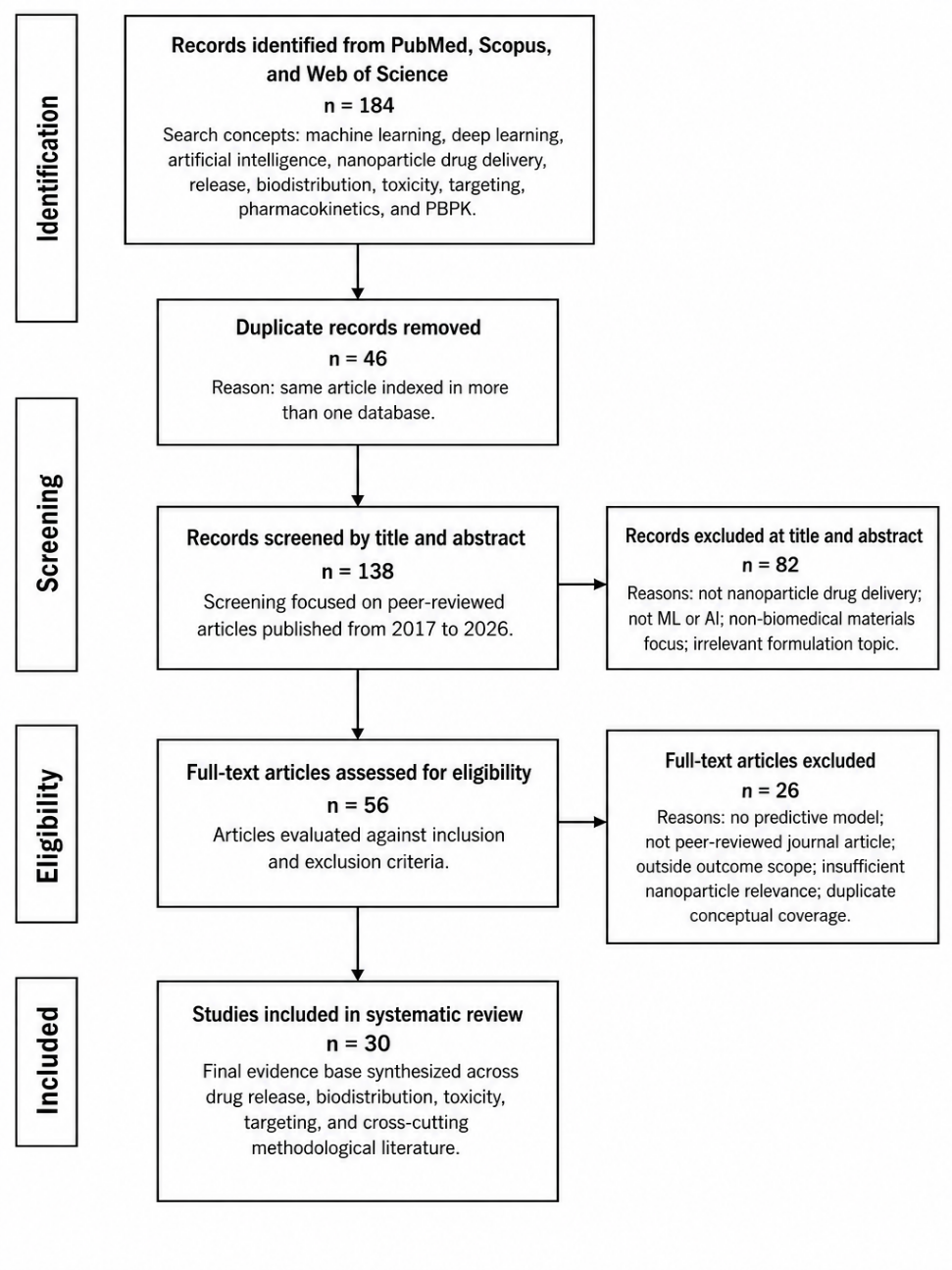
Figure 1 summarizes the PRISMA-compatible identification, screening, eligibility assessment, and inclusion process used to select the 30 studies included in this systematic review.
|
|
|
Figure 1. PRISMA 2020 Flow Diagram for Study Selection in the Systematic Review of Machine Learning for Nanoparticle Drug Delivery, 2017–2026 |
Data Extraction
Data extraction captured bibliographic information, nanoparticle type, data source, input features, modelling algorithm, prediction endpoint, sample size reporting, validation method, and performance metrics. Release studies were extracted for formulation variables, drug descriptors, kinetic outputs, and validation approaches, as illustrated by He and colleagues, Sun and colleagues, and Rezvantalab and colleagues [1, 3, 7]. Biodistribution and tumor delivery studies were extracted for organ or tumor accumulation endpoints, pharmacokinetic features, animal data, and PBPK integration where applicable [6, 10]. Review and benchmark articles were extracted for methodological recommendations, reporting limitations, and evidence gaps rather than treated as primary predictive modelling datasets.
Quality Assessment
Quality assessment used a structured ML-focused checklist covering data provenance, sample-size transparency, descriptor definition, preprocessing, train–test separation, internal validation, external validation, performance reporting, interpretability, and applicability to nanoparticle drug delivery. This approach was informed by recurring concerns in nanosafety and nanomedicine AI literature, where Winkler emphasized nanosafety-specific ML issues and Singh and colleagues highlighted the need for methodological discipline across nanotoxicology and nanomedicine [15, 16]. Studies that reported external validation, independent testing, or experimentally closed-loop design were judged more robust than studies relying only on cross-validation or internal splits. Risk of bias was considered higher when datasets were small, heterogeneous, poorly documented, or reused without clear separation between model development and evaluation.
Synthesis Approach
The synthesis was organized by prediction task rather than by algorithm alone because the clinical and experimental meaning of performance differs between release, biodistribution, toxicity, and targeting. Release studies were compared for kinetic endpoint, formulation descriptor set, and validation strategy, while biodistribution studies were compared for tissue or tumor accumulation endpoints and pharmacokinetic relevance [1, 6]. Toxicity and targeting studies were synthesized separately because predictive toxicology often depends on adverse biological response data, whereas targeting models emphasize uptake, ligand interactions, or delivery efficiency [14, 17]. Cross-cutting findings were then used to evaluate reproducibility, external validity, transparency, and translation potential across the 30 included studies.
Study Selection and Characteristics
PRISMA Flow
The PRISMA flow identified 30 eligible articles after removal of duplicates, title and abstract screening, and full-text eligibility assessment. Initial search concepts were designed to capture both primary predictive modelling studies and relevant reviews, including release modelling studies such as He and colleagues and pharmacokinetic or tumor delivery studies such as Chou and colleagues [1, 6]. Exclusion at screening most commonly reflected absence of nanoparticle drug delivery relevance, absence of ML or AI, or non-peer-reviewed publication type. Table 1 summarizes the study selection flow and exclusion reasons used to arrive at the final included set.
Study Characteristics
The included studies covered polymeric nanoparticles, lipid nanoparticles, inorganic nanoparticles, nanocarriers for cancer therapy, and mixed nanoparticle datasets. Primary modelling studies addressed release kinetics, PLGA formulation parameters, lipid nanoparticle delivery, brain delivery, tumor biodistribution, nanoparticle pharmacokinetics, drug-carrier efficacy, and toxicity prediction [3-5, 14, 17]. Review and perspective articles addressed broader ML applications in drug delivery, nanosafety, pharmaceutical formulation, nanomedicine, and cancer-targeted nanomedicine [11, 18, 19]. Table 2 provides a structured summary of the included studies, including nanoparticle type, ML model category, data type, outcome, sample-size reporting, and validation approach.
Data Sources and Preprocessing
Across the included studies, data sources ranged from curated literature datasets and in vitro release assays to in vivo tumor delivery datasets, pharmacokinetic data, toxicity databases, and formulation development records. Release and formulation studies often relied on physicochemical descriptors, formulation composition, drug properties, and experimental release measurements, while biodistribution studies incorporated nanoparticle attributes and biological delivery endpoints [1, 2, 9]. Data preprocessing commonly involved descriptor calculation, feature scaling, train–test splitting, feature selection, or model-specific encoding, although reporting depth was uneven across the evidence base. The diversity of data sources strengthened the scope of the review but also created comparability challenges that affected quality assessment.
Table 1 summarizes the PRISMA-based study selection process, detailing the identification, screening, eligibility assessment, and final inclusion of studies investigating machine learning and artificial intelligence approaches in nanoparticle drug delivery research.
Table 1. PRISMA Flow Diagram and Study Selection Process for Included Articles on Machine Learning Applications in Nanoparticle Drug Delivery
|
PRISMA stage |
Records or studies |
Reason or disposition |
|
Records identified from PubMed, Scopus, and Web of Science |
184 |
Search terms covered ML, DL, AI, nanoparticle drug delivery, release, biodistribution, toxicity, targeting, PBPK, and reviews |
|
Duplicate records removed |
46 |
Same article indexed in more than one database |
|
Records screened by title and abstract |
138 |
Screening focused on peer-reviewed articles from 2017–2026 |
|
Records excluded at title and abstract |
82 |
Not nanoparticle drug delivery, not ML or AI, non-biomedical materials focus, or irrelevant formulation topic |
|
Full-text articles assessed |
56 |
Articles evaluated against inclusion and exclusion criteria |
|
Full-text articles excluded |
26 |
No predictive model, not peer-reviewed journal article, outside outcome scope, insufficient nanoparticle relevance, or duplicate conceptual coverage |
|
Studies included in systematic review |
30 |
Final reference set used for synthesis |
Machine Learning Models for Drug Release
Models for Release Kinetics
ML models for release kinetics were among the clearest examples of nanoparticle drug delivery prediction because they linked formulation properties to experimentally measurable release profiles. He and colleagues treated drug-release nanoparticle system design as a dataset compilation and ML modelling task, showing that release prediction can integrate descriptors across formulation and drug variables [1]. Santana and colleagues extended this logic using perturbation-theory machine learning for coated-nanoparticle drug release systems, emphasizing that release behaviour depends on both baseline nanoparticle structure and perturbations in experimental context [2]. These studies indicate that release modelling is comparatively mature because the endpoint is quantifiable, formulation-linked, and suitable for supervised learning.
Input Features and Data
Input features for release prediction commonly included polymer type, coating characteristics, particle size, drug loading, formulation composition, and experimental conditions. Sun and colleagues used ML alongside in vitro experiments to study PLGA nanoparticle release, which illustrates the value of pairing controlled experimental measurements with predictive modelling [3]. Rezvantalab and colleagues focused on influential parameters in PLGA nanoparticles, showing that model interpretation can help identify formulation factors that shape nanoparticle performance [7]. Broader formulation literature also supports the relevance of ML for dosage-form and process prediction, as Muñiz Castro and colleagues demonstrated with a large drug delivery systems dataset and Wang and colleagues discussed for artificial neural networks in pharmaceutical formulation [20, 21].
Model Performance and Validation
Validation strategies in release modelling were generally stronger when studies separated training and testing data or connected predictions back to experimental measurements. The integration of ML with in vitro PLGA nanoparticle experiments by Sun and colleagues provided a clearer link between model output and measurable release behaviour than studies relying only on literature-derived retrospective datasets [3]. However, the review literature on ML in drug delivery cautions that high apparent performance may not guarantee generalizability when datasets are small, heterogeneous, or incompletely standardized [18]. Overall, release prediction appears promising but still requires external datasets, consistent reporting of performance metrics, and transparent descriptor definitions before it can support routine formulation decision-making.
Machine Learning Models for Biodistribution
Organ Accumulation Prediction
Biodistribution modelling addressed the prediction of organ, tissue, and tumor accumulation from nanoparticle descriptors and biological context. Lin and colleagues used ML and AI approaches to predict nanoparticle delivery to tumors, indicating that physicochemical and experimental descriptors can support supervised prediction of in vivo delivery efficiency [9]. Mi and colleagues extended this theme by modelling tissue distribution and tumor delivery in mice, which directly addressed organ-level nanoparticle disposition [10]. Wu and colleagues further emphasized that data-driven biodistribution prediction depends strongly on physicochemical descriptors, making descriptor quality central to biological inference [22].
PBPK Integration
PBPK integration represented one of the more translationally oriented approaches because it attempted to combine mechanistic pharmacokinetic structure with AI-assisted prediction. Chou and colleagues developed an artificial intelligence-assisted PBPK model to predict nanoparticle delivery to tumors in mice, showing that ML can complement compartmental modelling rather than replace it [6]. Khakpour and colleagues approached nanoparticle pharmacokinetics through multi-view learning, which is valuable because pharmacokinetic behaviour may depend on formulation, physicochemical, and biological views of the same system [23]. Together, these studies suggest that hybrid ML–PBPK models may be especially useful when purely data-driven models lack biological interpretability.
Model Limitations
Biodistribution models were limited by small datasets, heterogeneous animal models, inconsistent tissue sampling, and limited external validation. Mahdi and colleagues modelled nanoparticle delivery efficiency to cancer tumor sites, but such prediction tasks remain sensitive to differences in tumor type, animal model, dose, route of administration, and nanoparticle class [24]. Brain delivery studies by Yousfan and colleagues similarly showed that predicting nanoparticle transport across biological barriers requires data that capture both material properties and physiological constraints [5]. These limitations mean that biodistribution models should be interpreted as decision-support tools rather than definitive predictors of clinical delivery.
Machine Learning Models for Toxicity Prediction
In Vitro Toxicity Models
Toxicity prediction studies used ML to link nanoparticle descriptors with adverse biological responses measured in cell-based or curated toxicology datasets. Ahmadi and colleagues evaluated toxicity prediction of nanoparticles using ML approaches, highlighting the potential of supervised models for screening nanocarrier safety before extensive in vivo testing [14]. Xiao and colleagues compared automated ML approaches for nanotoxicity assessment, showing that algorithm selection and model optimization can substantially affect predictive performance [25]. These studies support the use of ML as an early-stage prioritization method, although model reliability depends on assay consistency and endpoint definition.
In Vivo Safety Predictions
In vivo safety prediction remained less developed than in vitro modelling because systemic toxicity depends on exposure, biodistribution, immune interaction, metabolism, and clearance. Winkler argued that AI and ML can strengthen nanosafety assessment, but the field requires careful attention to data quality, applicability domains, and uncertainty estimation [16]. Singh and colleagues similarly emphasized that nanotoxicology and nanomedicine can benefit from AI only when datasets are curated, biologically meaningful, and sufficiently transparent for risk interpretation [15]. For nanoparticle drug delivery, this means that toxicity models must eventually be connected to pharmacokinetic exposure and therapeutic context rather than treated as isolated classification tasks.
Feature Importance and Interpretability
Interpretability was especially important for toxicity prediction because regulators and experimentalists need to understand which nanoparticle properties contribute to adverse outcomes. Jyakhwo and colleagues used an ML-reinforced genetic algorithm for targeted discovery of selectively cytotoxic inorganic nanoparticles, illustrating how model-guided optimization can identify material features associated with desired or undesired biological effects [26]. AutoML approaches, as described by Xiao and colleagues, may improve performance but can reduce transparency if model selection, preprocessing, and feature contributions are not fully reported [25]. Therefore, feature importance, uncertainty reporting, and biological plausibility should be treated as core requirements in nanotoxicology ML.
Machine Learning Models for Targeting
Ligand–Target Interactions
Targeting prediction involved modelling the relationship between nanoparticle design, ligand presentation, biological target, and delivery outcome. Kibria and colleagues used ML to predict the efficacy of drug-carrier nanoparticle designs for cancer treatment, showing that targeting-relevant performance can be framed as a supervised prediction problem [17]. Cancer-focused AI nanomedicine reviews by Das and Kaushik emphasized that targeted delivery depends not only on nanoparticle composition but also on tumor biology, receptor expression, and therapeutic context [19]. These factors make ligand–target modelling more complex than release prediction because the endpoint is biologically contingent rather than formulation-only.
Cellular Uptake and Tumor Targeting
Cellular uptake and tumor targeting models increasingly used iterative experimental data and AI-guided design to improve delivery performance. Qiu and colleagues presented a lab-in-the-loop ML strategy for brain-targeting delivery system design, showing that experimental feedback can refine model-guided nanoparticle optimization [27]. Witten and colleagues used AI-guided lipid nanoparticle design for pulmonary gene therapy, demonstrating how closed-loop workflows can identify delivery systems with tissue-relevant performance [13]. Bae and colleagues similarly applied ML to rational lipid nanoparticle design for enhanced mRNA vaccine delivery, indicating that targeting and uptake predictions are becoming central to nucleic acid delivery development [8].
Emerging ML Architectures
Emerging architectures included deep learning, graph-informed modelling, transfer learning concepts, multi-view learning, and AI-guided optimization pipelines. Harrison and colleagues demonstrated deep-learning models for lipid nanoparticle-based drug delivery, while Su and colleagues reviewed AI-guided lipid nanoparticle design for mRNA delivery as a rapidly expanding area [5, 28]. Shen and colleagues described ML-empowered formulation design, optimization, and characterization of nanoparticulate delivery systems, linking modern model architectures with practical formulation workflows [29]. These developments suggest that targeting models will increasingly combine molecular descriptors, formulation variables, imaging-derived features, and experimental feedback in unified design loops.
Table 2 presents the major prediction tasks addressed by machine learning and artificial intelligence approaches in nanoparticle drug delivery, highlighting representative studies, commonly applied algorithms, performance metrics, key input features, and the principal validation challenges identified across the evidence base.
Table 2. Machine Learning Prediction Tasks, Algorithms, Input Features, and Validation Challenges in Nanoparticle Drug Delivery Research
|
Prediction task |
Representative studies |
Common algorithms |
Typical performance metrics |
Key input features |
Main validation concerns |
|
Drug release |
He and colleagues [1]; Santana and colleagues [2]; Sun and colleagues [3]; Rezvantalab and colleagues [7] |
Random forest, support vector regression, neural networks, PTML models |
R², root mean square error, mean absolute error |
Polymer type, coating, drug loading, particle size, formulation composition, release conditions |
Limited external validation and heterogeneous release protocols |
|
Biodistribution |
Chou and colleagues [6]; Lin and colleagues [9]; Mi and colleagues [10]; Wu and colleagues [22]; Khakpour and colleagues [23] |
Random forest, gradient boosting, neural networks, AI-assisted PBPK, multi-view learning |
R², prediction error, classification accuracy, tissue-level agreement |
Size, charge, material class, route, dose, animal model, tissue concentration |
Small animal datasets and poor cross-species generalizability |
|
Toxicity |
Ahmadi and colleagues [14]; Xiao and colleagues [25]; Winkler [16]; Singh and colleagues [15]; Jyakhwo and colleagues [26] |
Random forest, support vector machines, AutoML, genetic algorithm-assisted ML |
Accuracy, area under the receiver operating characteristic curve, sensitivity, specificity |
Physicochemical descriptors, composition, surface chemistry, cytotoxicity assay outputs |
Endpoint inconsistency, assay variability, and uncertain applicability domain |
|
Targeting |
Kibria and colleagues [17]; Qiu and colleagues [27]; Witten and colleagues [13]; Bae and colleagues [8]; Das and Kaushik [19] |
Deep learning, supervised ML, lab-in-the-loop optimization, AI-guided design |
Delivery efficiency, uptake, expression level, tumor accumulation, efficacy score |
Ligand features, lipid composition, target tissue, cellular uptake, tumor model, nucleic acid payload |
Biological context dependence and limited independent validation |
|
Cross-cutting formulation design |
Dorsey and colleagues [11]; Shen and colleagues [29]; Gormley [18]; Muñiz Castro and colleagues [20]; Wang and colleagues [21] |
Artificial neural networks, ensemble models, formulation prediction models |
R², accuracy, process performance metrics, optimization success |
Formulation composition, process variables, physicochemical descriptors |
Reproducibility, dataset standardization, and reporting completeness |
Cross-Cutting Analysis and Quality Assessment
Comparative Performance
Across prediction tasks, the strongest apparent performance was generally observed when endpoints were experimentally direct, such as release or formulation performance, rather than biologically layered, such as biodistribution or targeting. Gormley highlighted that ML in drug delivery is most useful when it is embedded in clear design questions, and Dorsey and colleagues made a similar point for lipid nanoparticle formulation and process development [11, 18]. Muñiz Castro and colleagues showed that large structured datasets can improve prediction of drug delivery system performance, although their broader formulation focus also illustrates that nanoparticle-specific generalization cannot be assumed [20]. Comparative performance therefore depended less on algorithm novelty alone and more on dataset structure, endpoint clarity, and validation design.
Quality and Risk of Bias
Risk of bias was lowest in studies that clearly described data sources, separated training and testing data, reported multiple performance metrics, and linked predictions to independent or experimental validation. Witten and colleagues and Qiu and colleagues were comparatively strong because AI-guided design was connected to experimental feedback, while Chou and colleagues strengthened translational relevance by integrating AI with PBPK modelling [6, 13, 27]. Risk of bias was higher in studies relying on small retrospective datasets, unclear preprocessing, or insufficient external validation, which is a recurring concern in ML-enabled nanomedicine reviews [12].
Reporting Standards
Reporting standards were inconsistent across the included literature, particularly for dataset availability, preprocessing decisions, hyperparameter tuning, and applicability-domain definition. Chou and colleagues’ review of ML and AI in nanomedicine emphasized the importance of transparent workflows, while Shen and colleagues identified reporting and standardization as central barriers for ML-empowered nanoparticulate drug delivery design [12, 29]. Wang and colleagues also noted that artificial neural network studies in pharmaceutical formulation vary widely in how models are characterized, optimized, and reported [21]. A reporting checklist tailored to nanoparticle ML should therefore include descriptors, raw data provenance, validation split logic, uncertainty estimates, interpretability outputs, and intended use.
Table 3 summarizes the methodological quality, reporting transparency, validation practices, reproducibility, and overall risk of bias across the included studies evaluating machine learning applications in nanoparticle drug delivery systems.
Table 3. Quality Assessment and Reporting Standards of Machine Learning Studies in Nanoparticle Drug Delivery Research
|
Quality criterion |
Low concern |
Moderate concern |
High concern |
Overall assessment across 30 studies |
|
Clear nanoparticle and formulation descriptor reporting |
17 |
10 |
3 |
Most studies described core nanoparticle inputs, but descriptor standardization was uneven |
|
Transparent data source and sample-size reporting |
16 |
9 |
5 |
Primary modelling studies usually reported datasets, while reviews were not applicable for sample-size assessment |
|
Appropriate train–test separation or internal validation |
18 |
8 |
4 |
Internal validation was common, but split logic and leakage prevention were not always clear |
|
External or independent validation |
12 |
8 |
10 |
External validation was present in a minority of studies and strongest in experimental feedback workflows |
|
Performance metric completeness |
15 |
10 |
5 |
Metrics were often reported, but cross-task comparability was limited |
|
Interpretability and feature importance |
11 |
12 |
7 |
Several studies reported influential features, but deep-learning and AutoML transparency varied |
|
Applicability-domain discussion |
8 |
13 |
9 |
Most studies did not fully define where predictions should or should not be trusted |
|
Reproducibility and data/code availability |
7 |
12 |
11 |
Reproducibility was constrained by incomplete data availability and inconsistent workflow reporting |
|
Translational relevance |
13 |
11 |
6 |
PBPK, closed-loop, and experimental validation studies were strongest for translational interpretation |
|
Overall risk of bias |
10 |
13 |
7 |
The evidence base is promising but methodologically heterogeneous |
Research Gaps and Future Directions
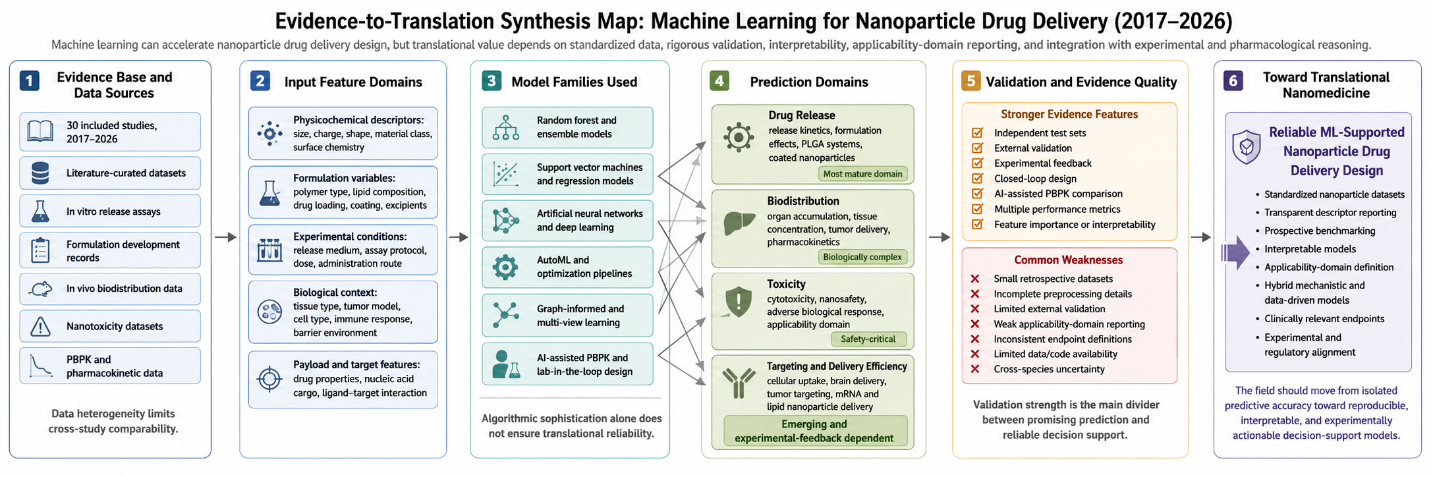
Figure 2 synthesizes how machine learning evidence in nanoparticle drug delivery progresses from formulation and biological data inputs to prediction tasks, validation practices, methodological gaps, and translational readiness.
|
|
|
Figure 2. Evidence-to-Translation Synthesis Map of Machine Learning Applications in Nanoparticle Drug Delivery |
Data Availability and Standardization
The most important gap is the lack of standardized, shareable, and task-specific datasets for nanoparticle drug delivery ML. He and colleagues showed that dataset compilation itself is a major contribution for release modelling, and Wu and colleagues similarly demonstrated the value of physicochemical descriptors for biodistribution prediction [1, 22]. However, descriptor definitions, assay conditions, nanoparticle nomenclature, and biological endpoints remain inconsistent across studies, limiting meta-learning and cross-study benchmarking. Future work should prioritize community datasets that connect formulation variables, characterization data, biological context, and delivery outcomes in machine-readable formats.
Model Generalizability
Generalizability remains uncertain because most models are trained on narrow chemical spaces, specific nanoparticle classes, or retrospective datasets. Lipid nanoparticle studies by Harrison and colleagues, Bae and colleagues, and Witten and colleagues show strong momentum toward AI-guided delivery design, but model transfer across tissues, payloads, and species still requires direct testing [4, 8, 13]. Biodistribution studies by Mi and colleagues and Khakpour and colleagues suggest that multi-endpoint and multi-view modelling may improve generalization, although biological heterogeneity remains a major obstacle [10, 23]. Future studies should report external validation, prospective validation, applicability domains, and failure cases as standard outputs.
Toward Clinical Translation
Clinical translation will require ML models that are interpretable, experimentally actionable, and compatible with pharmacological and regulatory reasoning. AI-assisted PBPK modelling, as demonstrated by Chou and colleagues, provides one path because it links data-driven prediction with mechanistic exposure concepts [6]. Cancer nanomedicine reviews by Das and Kaushik and Jena and colleagues suggest that ML-enabled targeting could improve therapeutic design, but translation will depend on robust validation in disease-relevant models and transparent assessment of safety [19, 30]. The field should move from isolated predictive accuracy toward decision-support models that guide formulation selection, experimental prioritization, and risk assessment.
Conclusion
This systematic review found that machine learning has become an increasingly important tool for nanoparticle drug delivery research between 2017 and 2026. The evidence base spans release kinetics, biodistribution, toxicity, and targeting, with the most mature applications appearing in release prediction and formulation optimization. Biodistribution and targeting models are advancing quickly but remain more dependent on biological context and experimental validation.
Across the included studies, model performance was shaped by the quality of input descriptors, clarity of endpoints, and strength of validation strategies. Random forest, support vector machines, neural networks, deep learning, AutoML, and AI-guided design workflows were all represented. However, algorithmic sophistication did not compensate for limited datasets, unclear preprocessing, or weak external validation.
The review also identified major methodological gaps in reproducibility, data standardization, interpretability, and applicability-domain reporting. These limitations reduce confidence in model transfer across nanoparticle classes, biological systems, and clinical contexts. Addressing them will require shared datasets, prospective benchmarking, transparent reporting, and closer integration between computational modelling and experimental nanomedicine.
Overall, ML has strong potential to accelerate nanoparticle drug delivery design, but its translational value depends on rigorous methodology rather than predictive performance alone. Future research should emphasize clinically relevant endpoints, hybrid mechanistic and data-driven models, and validation strategies that reflect real biological complexity. With these improvements, ML can become a reliable component of rational nanomedicine development.
Acknowledgments: None
Conflict of interest: None
Financial support: None
Ethics statement: None